
Where should a porta potty be placed on site?
Pick flat ground first. A standard unit runs about 44 by 48 inches on the ground and stands 92 inches tall, so it needs a footprint clear of low branches and overhead lines. Set it within reach of the service truck's hose, because the driver needs a straight shot to the tank valve without dragging line across a curb or a flower bed. If you are staging a roll-off dumpster rental on the same lot, keep the two apart. A roll-off delivery needs about 60 feet of straight clearance behind the truck, and that swing path should never cross your restroom's service side. On residential jobs, check where the septic line runs before you set anything down. If you are not sure, our porta potty permit requirements page walks through what to confirm with the city before delivery day. For ADA units, the accessible route to the door needs a stable, firm, slip resistant surface under ADA Standards section 302.1, and you need at least 5 feet of turning space nearby to meet the 60 inch turning circle in section 304.3.1.
Do I need a permit to place a porta potty in Waukesha?
Placement in the public right of way, on a sidewalk, or blocking a fire lane needs confirming with the city before you commit to a spot. We have not verified a specific Waukesha ordinance number for portable toilet placement, so do not assume a driveway placement is automatically fine. The same caution applies to a dumpster placement permit: dumpster placement permit cost and rules vary by property type and by whether the unit sits on a public street versus private lot. Check our dumpster permit requirements page and call the city before delivery if the unit will touch any public surface. For a construction site, placement also has to leave clear the routes required for site safety, and OSHA 1926.202 requires barricades that meet ANSI D6.1 wherever the public or workers could wander too close to an open trench or a staged unit. If you are running a construction site services package with fencing and a restroom together, plan the fence line first, then set the toilet inside it.
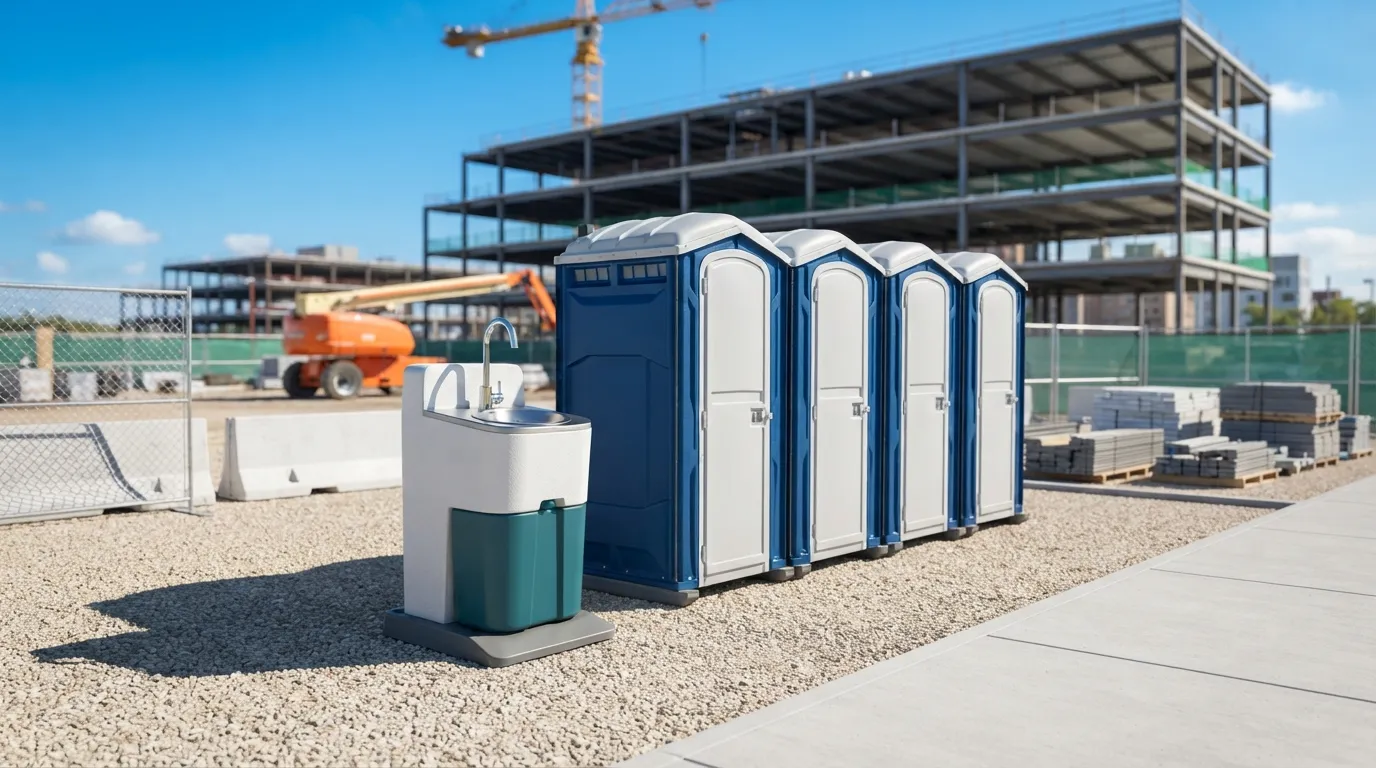
How many porta potties does a job actually need?
Crew size drives the count more than square footage does. OSHA 1926.51(c) sets the ratio for construction sites at one toilet for 20 workers or fewer, then one toilet seat and one urinal per 40 workers once you pass 20, scaling to one per 50 workers at 200 or more. A 15 person framing crew in Waukesha needs one standard unit; a 60 person crew needs two, minimum. Our how many porta potties do I need guide runs the math for bigger jobs and events. Agricultural sites follow a different rule: OSHA 1928.110 calls for one facility per 20 hand-labor employees, placed within a quarter mile walk, which matters for a spread-out farm site. See our farm and agricultural restrooms page if that is your job. Rental costs shift with placement complexity too; check porta potty rental cost or porta potty rental per day once you know your count.
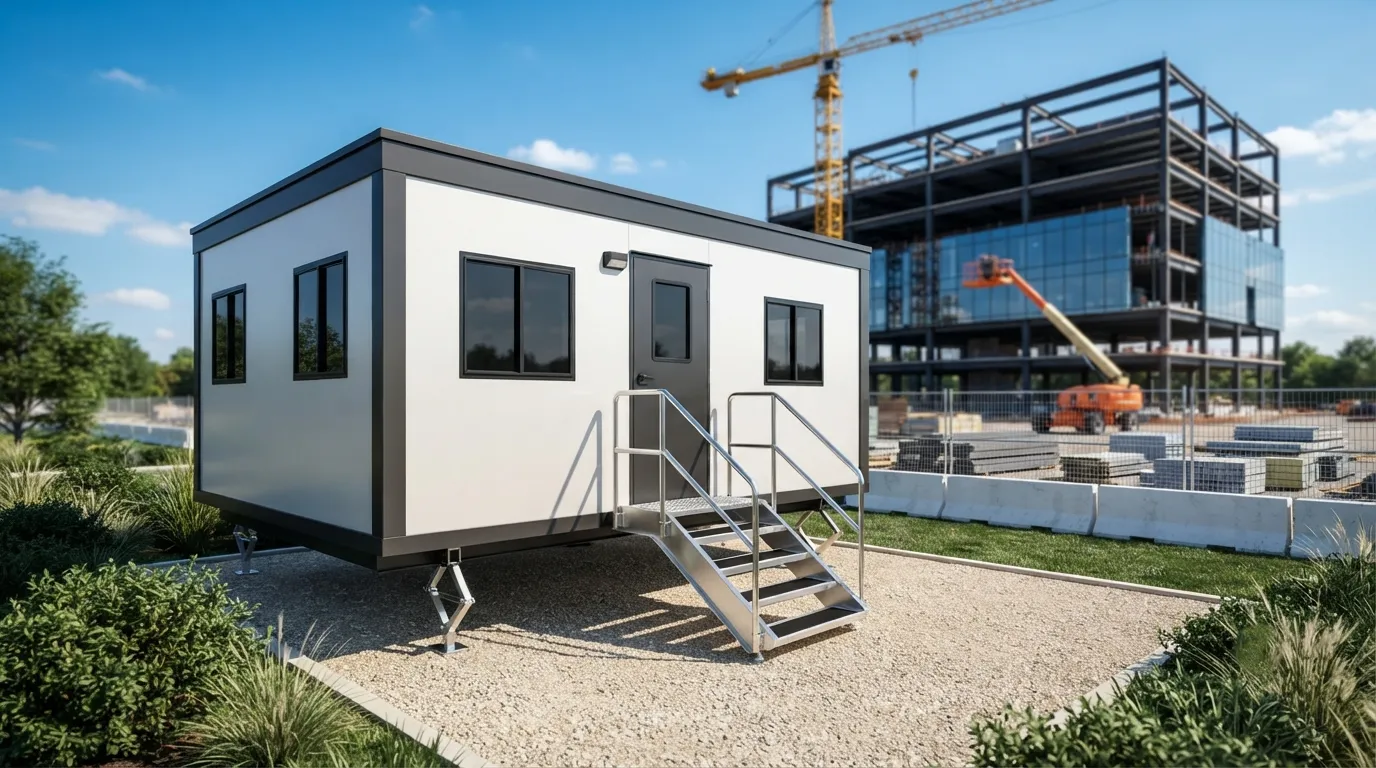
What surface and clearance does a placement need?
Firm and level beats convenient every time. A gravel pad or a paved lot both work; soft turf after rain does not, because the unit can sink or tip. Leave a clear path at least 36 inches wide to the door, matching the ADA Standards section 403.5.1 minimum clear width for an accessible route, and make sure the door opening itself clears 32 inches per section 404.2.3 if you are placing an ADA accessible porta potty. Where you cluster several standard units, ADA Standards section 213.2 requires at least 5 percent of them to be accessible units, never fewer than one. If your site also has a storage container rental or a mobile office trailer rental on it, keep the toilet placement clear of the trailer's step-down and any door swing; a mobile office trailer replacement doors situation on an older unit can eat into that clearance without warning. Lighting matters after dark too, and OSHA 1926.56(a) sets minimum illumination for active construction areas, so a light tower rental near the restroom path is worth the extra cord.
| unit | day | week | month |
|---|---|---|---|
| standard | $100-$350 | $130-$500 | $125-$325 |
| ada | $200-$400 | $240-$400 | not sold monthly |
| deluxe | $85-$1200 | $150-$290 | not sold monthly |
A weekend rate for a standard unit typically runs $125 to $400 depending on the event. Compare durations on our monthly porta potty rental page before you commit to a long job. Placement issues, not the unit itself, cause most of the service delays we see, whether that is a locked gate blocking the truck or a septic tank pumping in Placerville-style rural setup where the drain field sits closer than expected. If your property runs its own septic system alongside rented units, our septic pumping service and how often to pump a septic tank pages cover the 3 to 5 year cycle most tanks need.
Do porta potties need to sit on concrete?
No. Gravel, asphalt, and packed dirt all work if the ground is level and stable under ADA Standards section 302.1. Concrete is easiest for wheelchair access and cleanup, but not required for a standard unit placement in most residential or event settings.
Can a porta potty be placed near a septic field?
Avoid it. Truck weight and repeated foot traffic can damage a drain field. Set units on undisturbed ground at least a few feet away, and confirm the field's exact boundary before delivery if you are unsure where the lines run.
What happens if a unit is placed in the right of way without checking first?
The city can require you to move it, and that costs you a rescheduled service call. Right of way placement in Waukesha needs confirming with the city first; nothing about it is standardized enough to assume.
How far from the building should a handwashing station sit?
Close enough for workers to reach it without a long walk, ideally right beside the toilet cluster. 29 CFR 1910.141(d)(2) requires soap and towels or a hand drying device at the station; hand sanitizer alone does not satisfy that rule.
Do I need an accessible unit even for a small event?
Yes, if you are clustering multiple units. ADA Standards section 213.2 requires at least one accessible unit in any cluster, regardless of how small the total count is, with a minimum of 5 percent for larger groupings.
Next step
Get a delivery date
Tell us the address, the dates and the headcount. We size the order and confirm the route.