
How many toilets does a farm crew need?
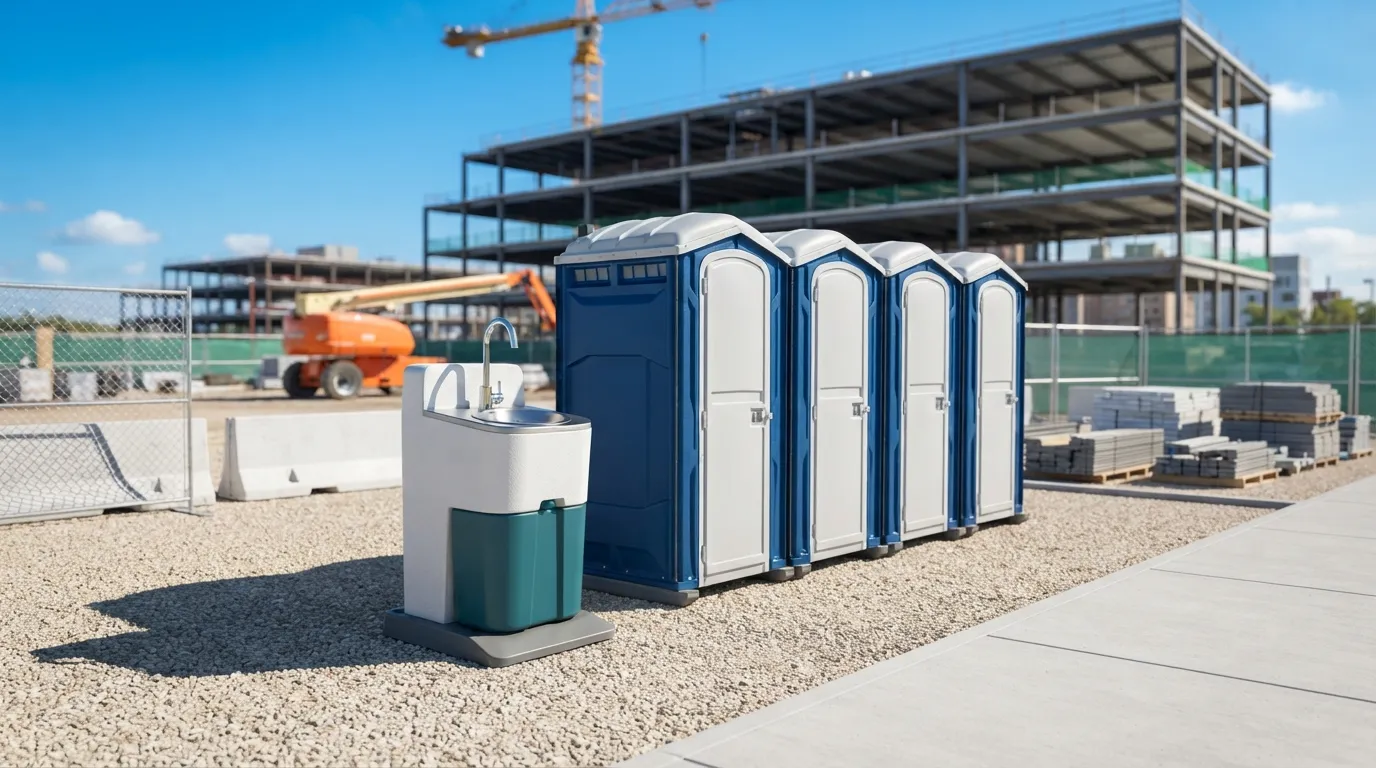
OSHA's field sanitation standard, 1928.110, sets the baseline for agricultural hand-labor employees: one toilet facility per 20 workers, positioned so nobody walks more than a quarter mile to reach it. That is different from the construction ratio under 1926.51(c), which allows one unit per 20 workers up to a certain headcount and then shifts the ratio as crews grow past 20. Most Waukesha operations run smaller crews during planting and harvest, so a single standard unit or two often covers the season. Larger operations with seasonal labor crews, especially during corn or soybean harvest, may need units spread across multiple fields rather than one central location, since a quarter mile walk from the far end of a 200 acre parcel just is not realistic. Waukesha Porta Pros maps placement against your field boundaries before quoting, and if you are unsure how many units your acreage and crew size need, our porta potty needs guide walks through the math. Water matters too. OSHA 1926.51(a)(1) requires an adequate supply of potable water at any workplace, and on a farm that usually means pairing toilets with a portable sink or a dedicated handwashing station at the same access point, not scattered separately.
Where should units go on farmland?
Placement drives everything on a working farm. A unit needs firm, level ground, not the edge of an irrigation ditch or a slope that turns to mud after rain. Our placement guide covers ground prep, but the short version for agricultural sites is this: pick the field entrance, a headland, or wherever the tractors already turn around, since that ground is compacted and access is already cleared. Delivery trucks need roughly 60 feet of straight clearance to set a unit safely, which matters on properties with tight gates or overgrown fence lines. If your crew works multiple parcels, we will stage units at each active field and move them as the harvest progresses, billing under a monthly rental rather than restarting a new order each time you shift ground. Farms near Waukesha proper, including operations closer to New Berlin roughly 8 miles southeast, sometimes split delivery between two sites in a single run, which keeps the delivery fee down compared to two separate trips. For crews working near livestock, we recommend units set back from water troughs and feed lines both for sanitation and so tank service trucks are not competing with animals for the same lane. A handwashing station placed right next to the toilet, not fifty yards off, is what actually gets used between rows.
Do farms need septic or holding tank service too?
Farmhouses and outbuildings on a private septic system still need the tank pumped on a schedule, and that is separate from portable toilets serving field crews. A residential septic tank is typically pumped every 3 to 5 years depending on tank size and household size, and if a farm has a bunkhouse or converted outbuilding with its own system, the same interval applies. Our septic pumping service covers routine visits, and the how often to pump guide breaks down what drives that 3 to 5 year window. Some operations run a dairy parlor or wash station with a grease interceptor if there is any food-service or processing component; those get pumped once fats, oils, grease and solids reach 25 percent of the liquid depth, not on a fixed calendar. If your farmhouse system backs up during harvest when you have the least time to deal with it, our emergency septic service runs same-day where the schedule allows. For crews without a fixed structure nearby, a holding tank rental is often simpler than septic work entirely, since it is delivered, serviced on a set interval, and removed at season's end with no plumbing involved.
What does a farm restroom rental cost?
Pricing depends on unit count, season length and how many fields you are covering. A standard unit runs in the $100 to $350 per day range or $130 to $500 per week, with monthly agricultural rentals typically landing between $125 and $325. Our rental cost guide has the full breakdown by duration.
Can I move units between fields during harvest?
Yes. We stage units at active fields and relocate them as harvest moves, usually under one monthly agreement rather than separate orders. Tell us your rotation schedule up front so we can plan delivery routes and avoid extra trip charges mid-season.
Do farmworkers need a handwashing station separate from the toilet?
Yes, ideally at the same location. OSHA's general water supply rule, 1926.51(a)i(1), and the field sanitation standard both point toward washing access near the toilet, not just water somewhere on the property. A handwashing station or portable sink placed at the same access point gets used; one set apart usually does not.
How far in advance should I book for harvest season?
Book at least two to three weeks ahead if possible, since harvest is the busiest stretch for every farm in the Waukesha area and truck routes fill fast. Our request a quote page is the fastest way to lock in dates before the season gets tight.
What if my farm is outside Waukesha proper?
We deliver across the region, including areas like Brookfield about 9.4 miles northeast and New Berlin about 8.2 miles southeast. Check our service areas page for full coverage, or just ask when you request a quote and we will confirm the drive.
Next step
Get a delivery date
Tell us the address, the dates and the headcount. We size the order and confirm the route.