
What does OSHA require for handwashing on a job site?
The rule people quote most often, 1926.51(f)(1), is not a blanket handwashing mandate. It applies specifically where employees apply paints, coatings, herbicides or insecticides, or work around other harmful contaminants. If your Waukesha crew is doing general framing or concrete work with no chemical exposure, that citation does not apply to you, and you should look instead at general sanitation coverage under OSHA portable toilet requirements. For general industry workplaces rather than construction sites, 1910.141(c)(1)(i) sets the toilet ratio and 1910.141(d)(2) sets the washing facility standard: soap, plus towels or a hand drying device. Hand sanitizer alone does not satisfy that rule. We size units against your actual crew and task list rather than guessing, and we walk through the difference between hand sanitizer station rental and a true washing station before you order, because they solve different problems and only one meets the written standard.
How many handwashing stations do I need for my crew?
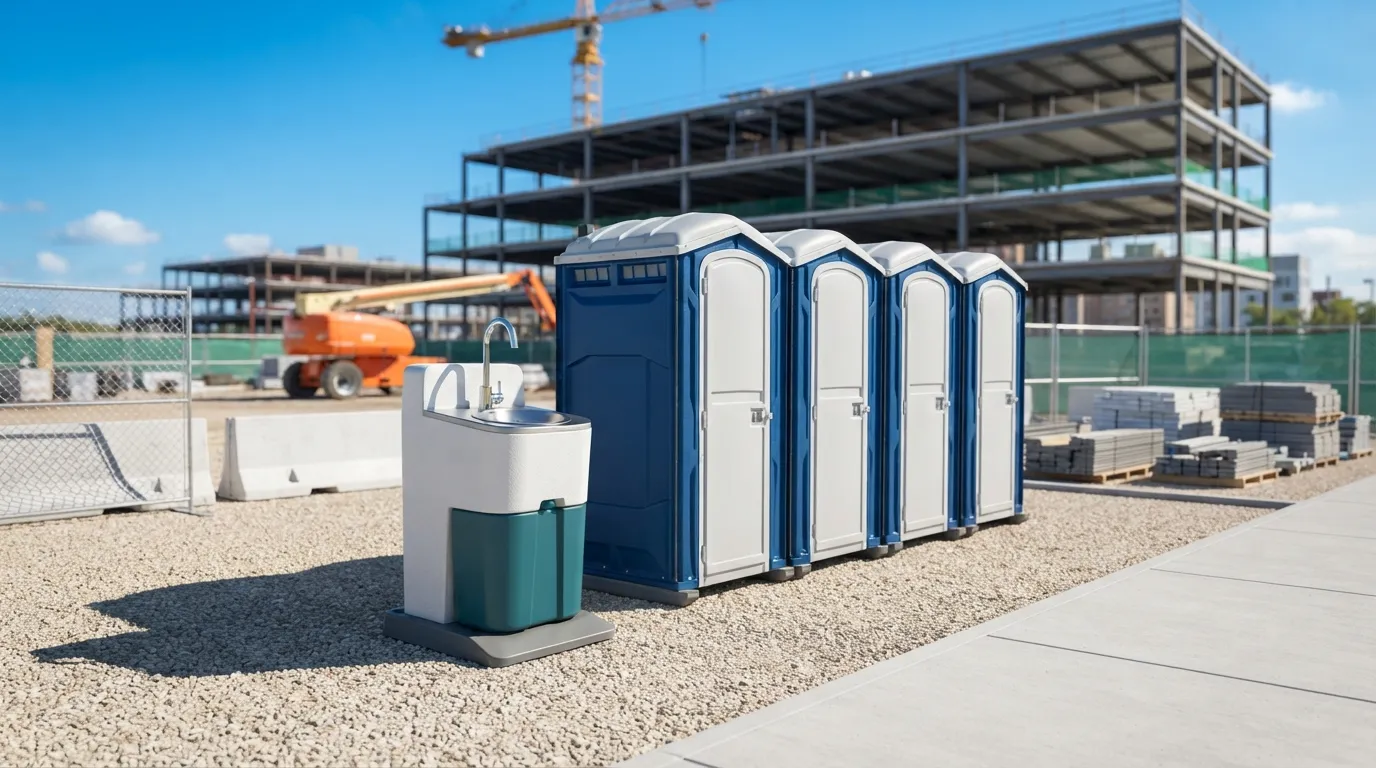
Match stations to worker count and how spread out the site is, the same logic used for toilet counts under OSHA 1926.51(c)(1): one facility per 20 workers up to 20, then one seat and one urinal per 40 workers beyond that. Agricultural operations follow a separate standard, 1928.110, which calls for potable water, toilets and handwashing within a quarter mile walk of hand-labor employees, at roughly one facility per 20 workers. A 40-person Waukesha crew spread across a large lot often needs two or three stations placed near work zones rather than one bank at the trailer. Pair your handwashing station rental order with a look at how many porta potties do I need since both counts get sized the same way. For sites needing a full sink setup instead of a basin unit, a portable sink rental gives running water without plumbing into an existing line.
Where should handwashing stations be placed on site?
Put stations at task transitions, not just at the exit gate. ADA Standards 403.5.1 sets a 36 inch minimum clear width for the accessible route leading to any unit, and 404.2.3 requires at least a 32 inch clear door opening, so keep approach paths clear of stacked material and cords. ADA Standards 304.3.1 also calls for a 60 inch turning circle at accessible units, which matters if your Waukesha site includes an ADA accessible porta potty cluster near the handwashing bank. Firm, stable, slip resistant ground under the unit is required by ADA Standards 302.1, so gravel or plywood pads under a station near a mud zone save you a callback. Our porta potty placement guide covers ground prep and clearance in more depth, and if the site sits partly in the public right of way, that placement needs confirming with the City of Waukesha before delivery day.
When do I need handwashing stations versus just hand sanitizer?
Hand sanitizer works fine for casual foot traffic at an event gate, but it does not meet 1910.141(d)(2) where the standard applies, because that rule specifically calls for soap and towels or a drying device. Any job involving paint, coatings, herbicides or insecticides falls under 1926.51(f)(1) and needs real washing capability, not sanitizer. Waukesha Porta Pros stocks both: sanitizer stations for events and general foot traffic, full handwashing units for job sites with chemical exposure. An adequate supply of potable water is required at all places of employment under 1926.51(a)(1), so a station that runs dry by midday does not clear the bar. We service and refill on a schedule matched to crew size, and busier sites get checked more than once a week under the same logic ANSI/PSAI Z4.3 uses as its baseline service interval for portable sanitation. Renovation crews doing a lot of coating work should pair a station with a home renovation porta potty order rather than treating them as separate errands.
Pricing reference
| item | duration | typical price |
|---|---|---|
| handwashing station, daily use | day | included in delivery fee band |
| delivery fee | day | $150 |
| delivery fee | week | $100 |
| delivery fee | month | $172 |
Delivery fees run higher for single-day drops than for week or month terms because the truck trip is the same regardless of rental length. Full pricing detail sits on our porta potty rental cost and porta potty rental per day pages, and long jobs should check the monthly porta potty rental page before committing to weekly billing.
Does a small job site really need a separate handwashing station?
Yes, if any coating, paint, herbicide or insecticide work happens on site, 1926.51(f)(1) applies regardless of crew size. A two-person Waukesha punch list crew painting trim still needs washing access, not just sanitizer. Check our handwashing station rental page for single-unit options sized for small crews.
Can hand sanitizer replace a handwashing station?
No. 1910.141(d)(2) requires soap plus towels or a hand drying device; sanitizer does not satisfy that standard. It works as a supplement at event entrances, covered on our hand sanitizer station rental page, but not as the sole handwashing provision on a covered job site.
How far can a handwashing station be from the work area?
OSHA does not set a fixed distance for construction sites, but agricultural field sanitation under 1928.110 requires access within a quarter mile walk. We place stations by task zone rather than a single number, detailed on our porta potty placement guide.
Do I need an ADA accessible handwashing station?
If your site clusters portable toilets, ADA Standards 213.2 requires at least 5 percent to be accessible, minimum one unit, and the handwashing setup nearby should match that access route. See ADA restroom requirements for full detail on clearances.
What is included with a handwashing station rental in Waukesha?
Waukesha Porta Pros delivers the unit, fills the water reservoir, and stocks soap and towels to meet 1910.141(d)(2). Service visits refill supplies on a schedule matched to crew size. Request exact terms through our request a quote page.
Next step
Get a delivery date
Tell us the address, the dates and the headcount. We size the order and confirm the route.